
Education: +2 / 10+2 / PCL (any stream; Math recommended)
Minimum Marks: Second Division (~45%) or CGPA ≥ 2.0
Entrance: Required for TU-affiliated colleges
Documents: +2 marksheet, SEE marksheet, character & migration certificate, photos

The BSc in Computer Science and Information Technology (CSIT) is a four-year undergraduate program that equips students with a strong foundation in computing, programming, software development, and information technology. The course combines theoretical knowledge with practical skills in areas such as algorithms, database management, networking, cybersecurity, web and mobile application development, and software engineering. It emphasizes logical thinking, problem-solving, and analytical abilities, preparing students to design and implement efficient IT solutions in various domains. Graduates gain the skills needed for careers in software development, IT consulting, network administration, data analysis, and emerging fields like artificial intelligence and cloud computing, with opportunities for further studies or professional certifications.
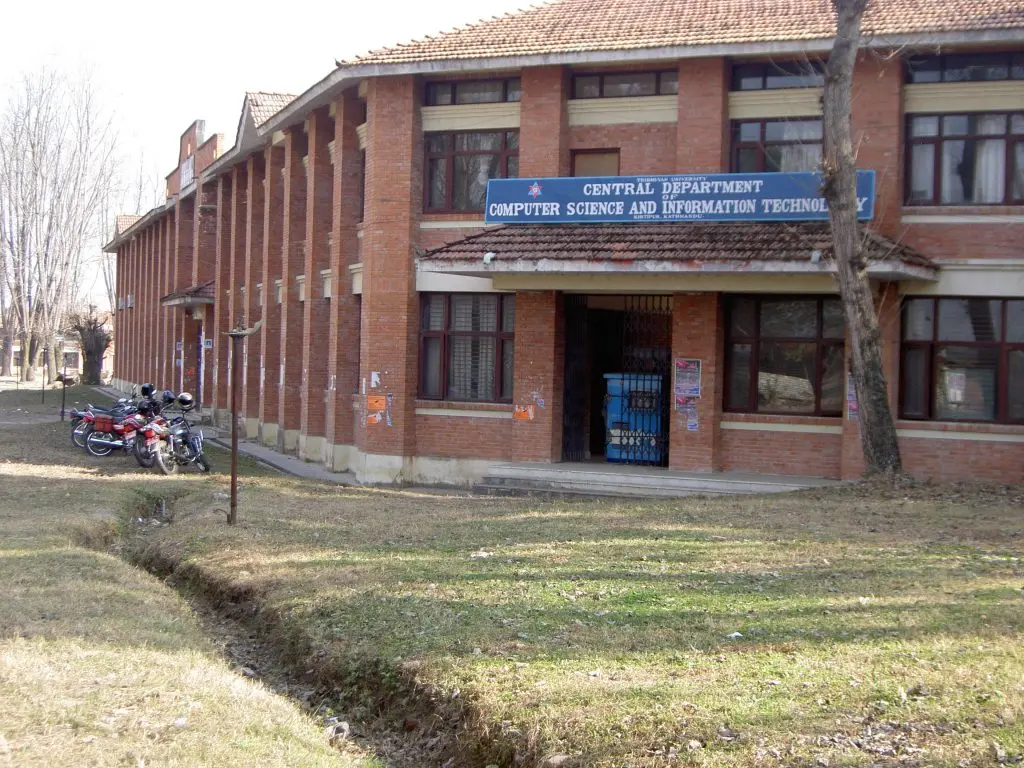
| Affilation | Tribhuwan University (TU) |
| Duration | 4 Years |
| Institute Type | College |
| Average Fees Incurred | Government/TU constituent colleges: ~NPR 3–4 lakhs total for the 4‑year program Private/TU‑affiliated colleges: ~NPR 6–8 lakhs (can be higher in some institutions) |
| Average Salary Offered | Entry-level: ~NPR 25,000–50,000/month With experience: ~NPR 60,000–120,000+/month |
Comprehensive Curriculum: Covers programming, algorithms, databases, networking, cybersecurity, and software engineering.
Practical Learning: Emphasis on lab sessions, coding projects, and real-world IT applications.
Specialization Opportunities: Options to focus on AI, Data Science, Cloud Computing, or Web/Mobile Development in later semesters.
Problem-Solving & Analytical Skills: Develops logical thinking and the ability to design efficient IT solutions.
Internship & Industry Exposure: Opportunities to gain hands-on experience in IT companies and startups.
Global Recognition: Degree is recognized internationally, enabling career or further studies abroad.
Project-Based Learning: Capstone projects and thesis work prepare students for professional challenges.
Completion of 10+2 or equivalent from a recognized board.
Must have studied Science or Mathematics stream (Physics, Chemistry, Mathematics preferred).
Minimum required percentage in higher secondary education usually 45–50%, depending on the university or college.
Some universities may conduct an entrance exam or interview for admission.
Students from other streams may be considered if they meet bridge course requirements (varies by institution).
Graduates of BSc CSIT have a wide range of career opportunities in the IT and technology sector. They can work as software developers, web and mobile application developers, database administrators, network and system administrators, IT consultants, and cybersecurity analysts. With specialization or additional certifications, careers in data science, artificial intelligence, cloud computing, and machine learning are also possible. Graduates can find employment in IT companies, banks, government agencies, educational institutions, startups, and multinational corporations. Additionally, BSc CSIT provides a strong foundation for higher studies such as MSc in CSIT, MBA in IT, or international degrees, which can further enhance career prospects. Freelancing and entrepreneurship in software development and IT services are also viable paths.
(BSc CSIT) typically spread over 4 years (8 semesters):
Introduction to Computer Science
Programming Fundamentals (C / Python)
Mathematics for Computing
Digital Logic and Computer Organization
Communication Skills
Lab Work & Practical Programming
Data Structures and Algorithms
Object-Oriented Programming (C++ / Java)
Database Management Systems (DBMS)
Operating Systems
Computer Networks Basics
Software Engineering Fundamentals
Lab & Mini Projects
Web Development (HTML, CSS, JavaScript, PHP)
Mobile Application Development (Android / iOS basics)
Network Administration & Cybersecurity
Artificial Intelligence / Machine Learning (Elective)
Elective Courses (Cloud Computing, Data Science)
Internship / Industrial Training
Advanced Database & Data Analytics
Advanced Software Engineering & Project Management
Elective Specialization (AI, Cloud Computing, Big Data, Cybersecurity)
Capstone Project / Thesis Work
Seminar & Presentation Skills
Strong emphasis on practical labs and project-based learning.
Opportunity for industry exposure through internships.
Electives allow focus on emerging technologies.
Final year project demonstrates problem-solving, coding, and IT management skills.

Interested in this course?
Apply Now Submitting Form.....